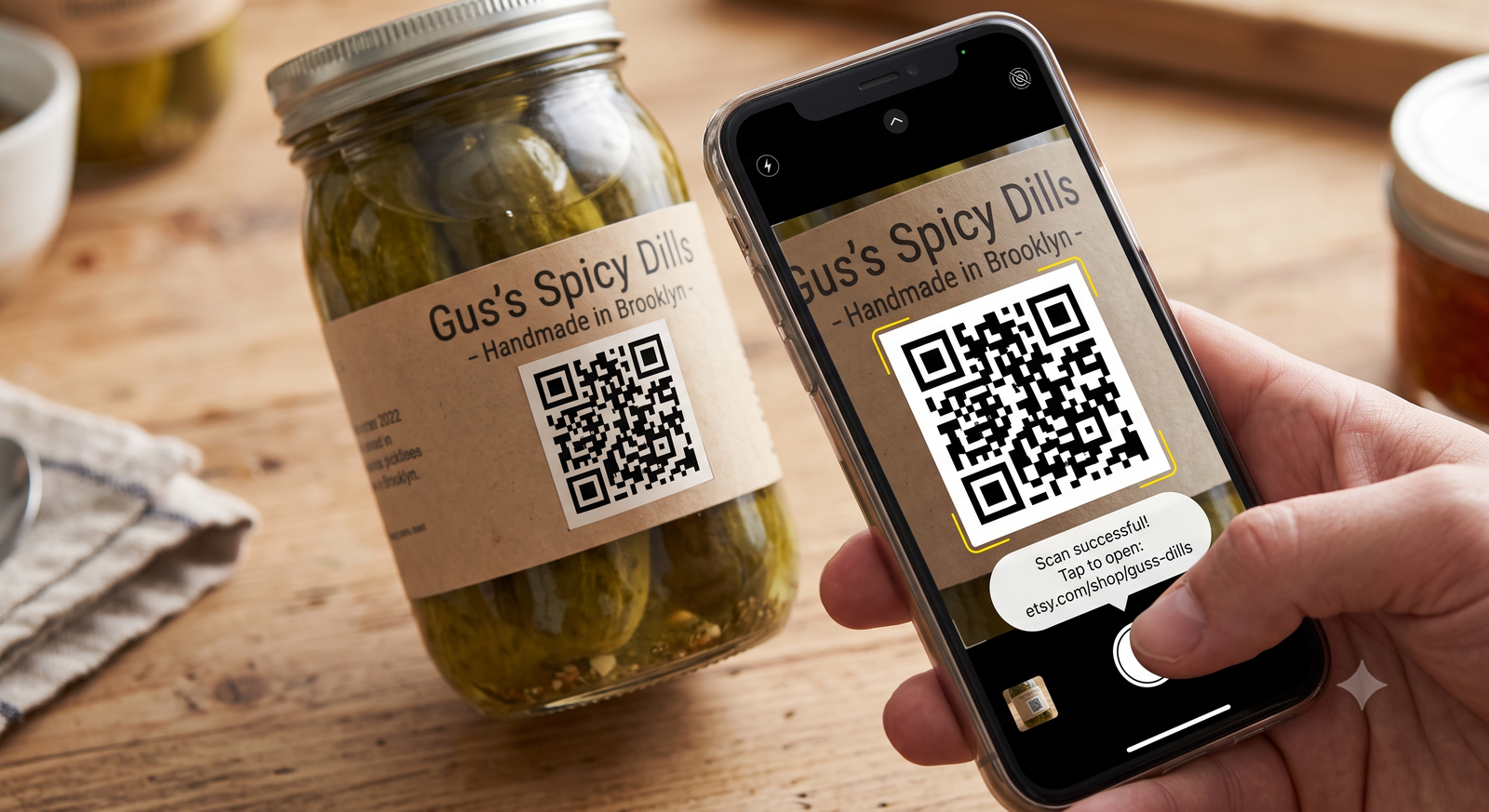
How cameras translate black and white squares into digital actions, and why that matters for physical products.
How the squares hold data
A QR code is a two-dimensional barcode. Traditional grocery store barcodes only store data in a single horizontal line. QR codes store information both horizontally and vertically. So they pack hundreds of times more data into a tiny physical square.
Most of the time, that stored data is just a web link.
How your phone reads it
You open your camera app and point it at the printed image. The software immediately looks for the three large boxes in the corners. These anchor points tell the lens which way is up and how to orient the grid.
The camera then reads the scattered black and white pixels as binary data. The software translates that binary string directly into a URL. A bubble pops up on your screen. You tap it and the website loads.
Connecting physical objects to the internet
You print a code on a physical item to remove friction. People hate typing long web addresses.
Say you start a business selling homemade pickles. You slap a QR code on the lid of your jars. A customer finishes the batch, scans the lid, and lands directly on your Etsy shop to buy more.
Or maybe you build custom power electronics. You assemble a single-phase full-bridge inverter and stick a code on the metal casing. A student or technician scans it to instantly download the PDF wiring diagram for that specific unit.
The physical object becomes a direct portal to your digital storefront or technical documentation. You just need a phone camera to bridge the gap.